A clear route from identifying the right opportunity to launching a working AI system—and deciding who
manages it next.
Step 01
Audit the opportunity
AI Opportunity Audit
We review how work moves through your business, identify where AI or automation could create credible value and recommend the strongest first workflow.
Further workflows are scoped and added only when the evidence supports them.
Works with your stack
Built around the tools your team already uses.
Layer connects the systems already running your business, including email, CRM, finance, documents
and internal tools, so useful work can move between them without forcing a platform change.
And the tools specific to your business.
Example systems
Systems Layer can build
Every system is shaped around the teams, tools and software already inside the business.
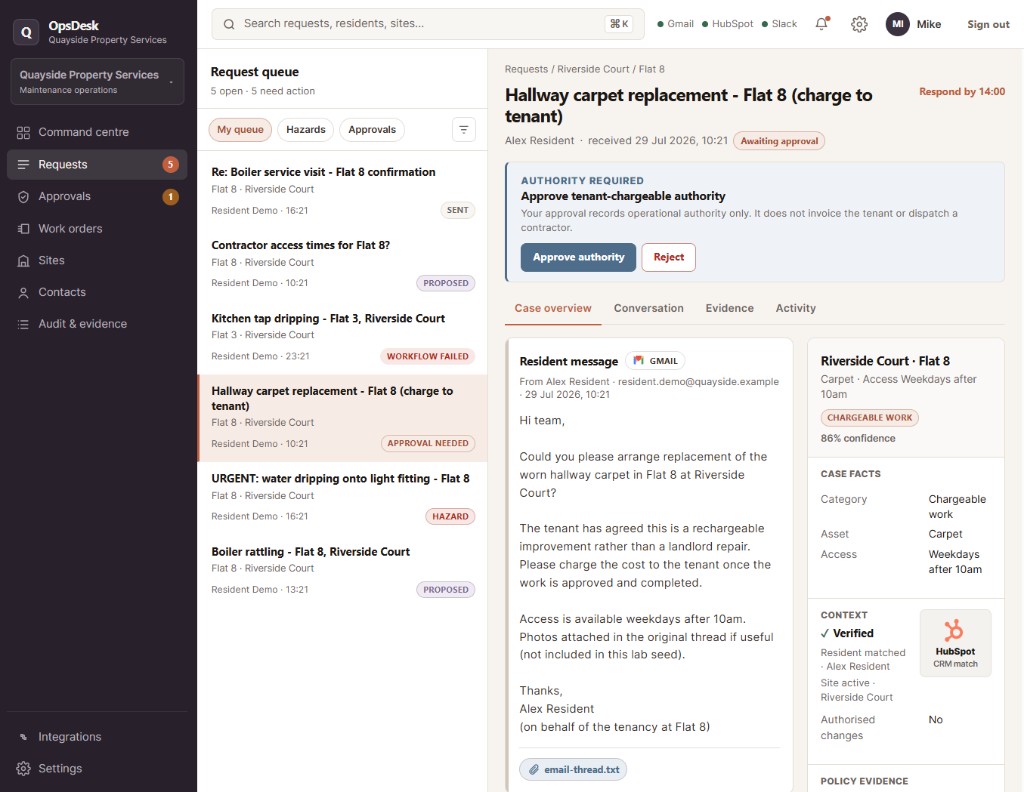
Shared Inbox Routing & Approval
Requests arriving by email are classified, matched with the right context and routed according to urgency and your business rules. Routine work keeps moving, while exceptions and sensitive actions are held for the right person to approve.
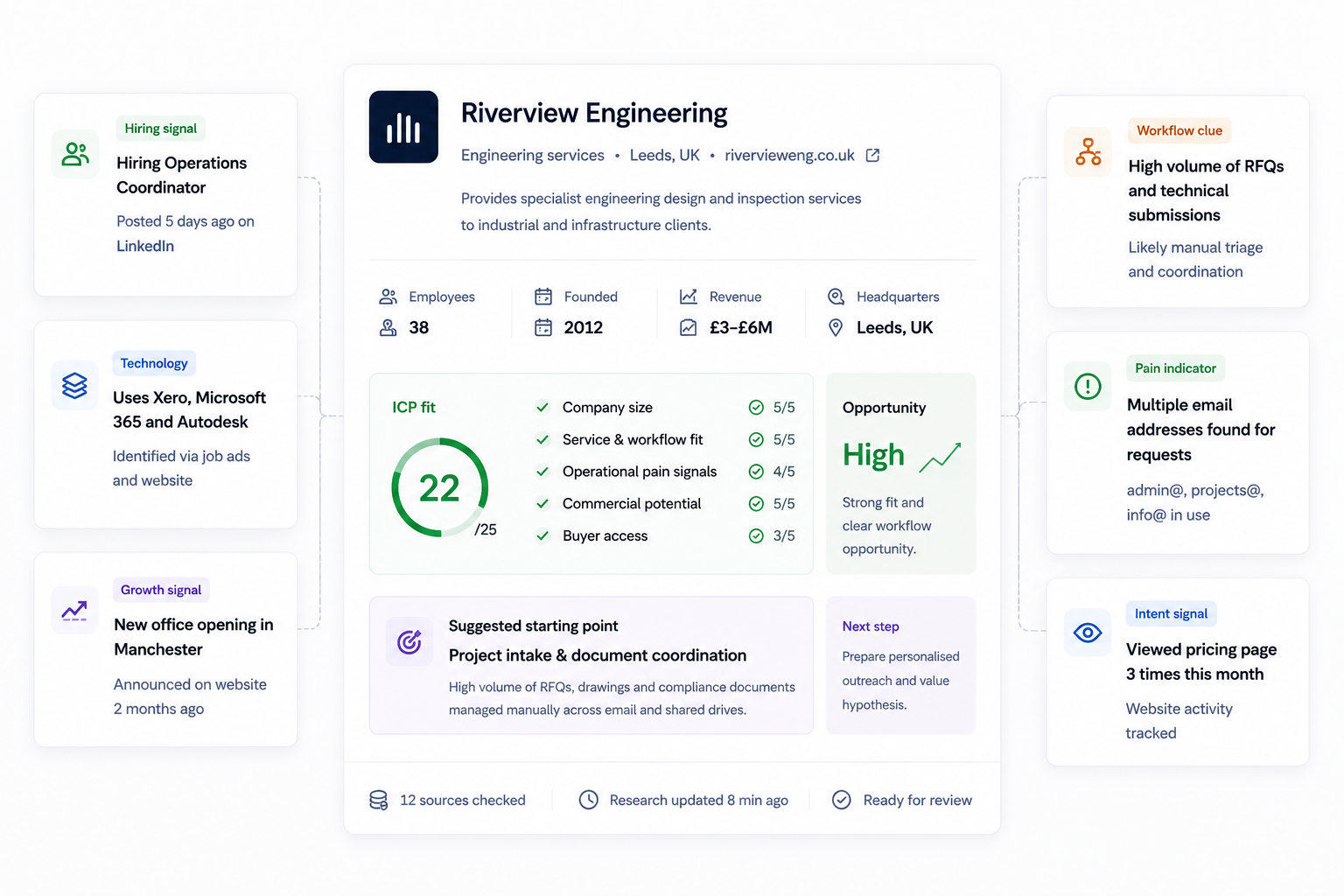
New prospects are continuously researched, enriched and assessed against your ideal customer profile. The best opportunities flow into the CRM with useful context and tailored outreach ready for review.
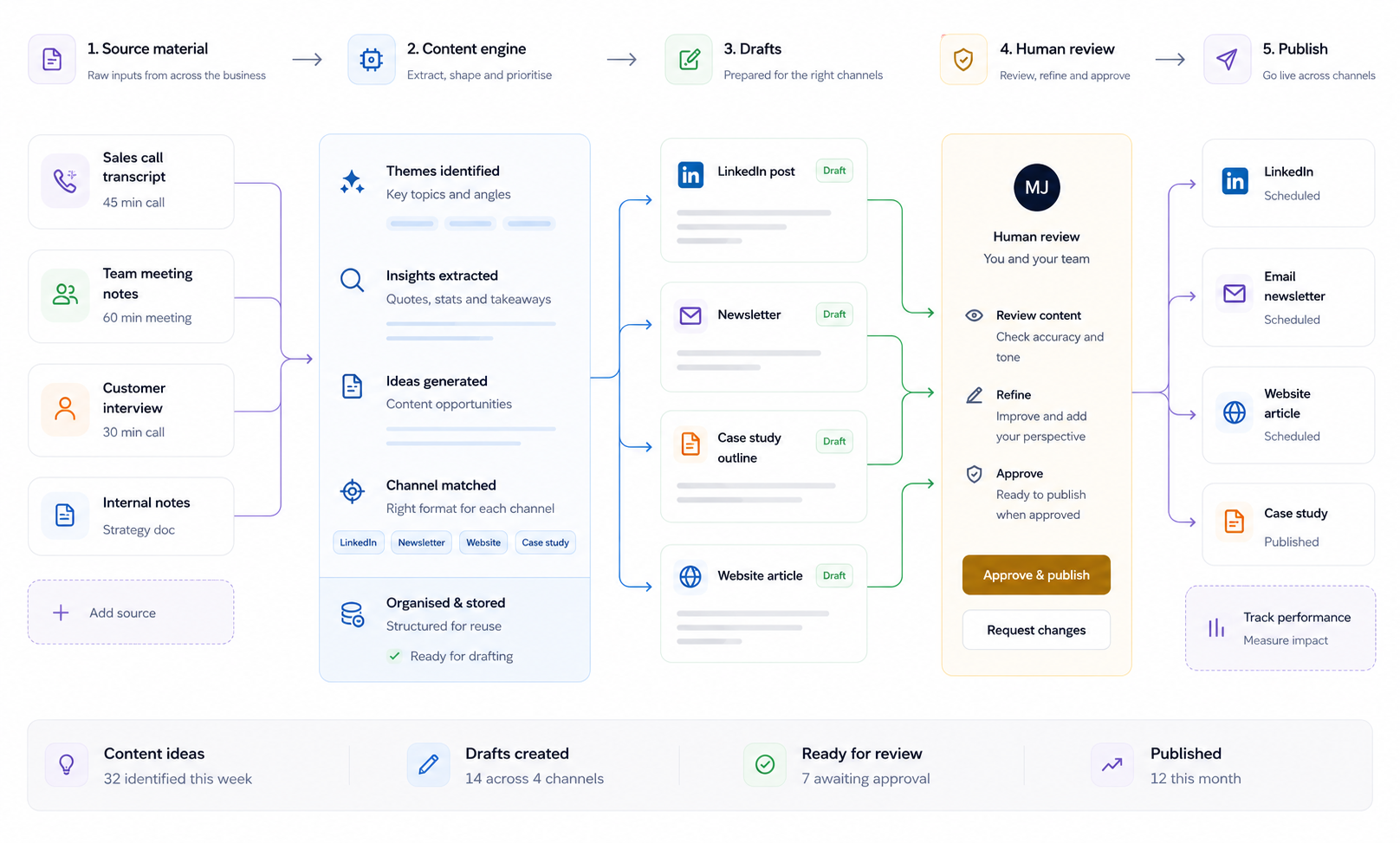
Calls, meetings and internal knowledge are continuously turned into content ideas and first drafts. Relevant material is organised, shaped for the right channels and moved towards publication, with your team reviewing what goes live.
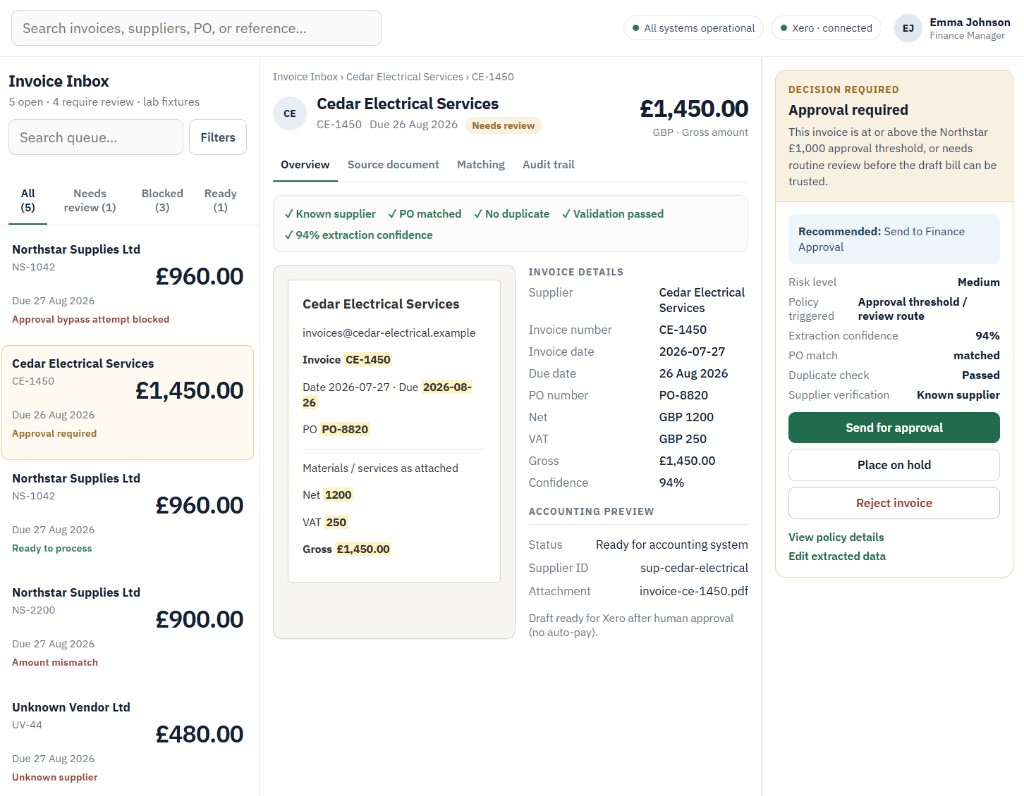
Invoices that arrive by email are extracted, checked against your rules and prepared as a draft bill in Xero or the accounting software the business already uses. Payment stays held until finance approves them.
We measure the change that matters to the business—not AI activity for its own sake. The right measure
depends on the workflow and the outcome you are trying to improve.
01
Hard savings
Costs that genuinely disappear from the business—not just time saved on paper.
02
Capacity released
Time and attention freed up for more valuable work.
03
Cost avoidance
Future hiring, outsourcing, rework, penalties or tools the business may no longer need.
04
Revenue and cash impact
Better conversion, throughput, retention, invoicing or collections.
05
Risk and control improvement
Fewer errors, clearer accountability, stronger compliance and greater resilience.
06
Service and experience improvement
Faster, more consistent and less frustrating experiences for customers and employees.
Questions, answered
Frequently asked questions
Clear answers about how Layer works, what we build and how a project begins.
What kinds of businesses do you work with?
Layer works best with growing businesses where important work is spread across email, spreadsheets, documents and different software tools.
The strongest fit is usually a business where repetitive admin, manual handoffs or disconnected information are starting to slow the team down.
Do we need to replace our existing software?
Usually, no.
Layer is designed to work around the tools your team already relies on. We connect the right systems, improve how information moves between them and only recommend replacing software where there is a clear reason to.
What do you automate, and what stays with our team?
We automate the repetitive and predictable parts of a workflow first: moving information, checking rules, preparing work, routing requests and keeping systems updated.
Where judgement, approval or accountability matters, the right person stays in control. The aim is not maximum automation. It is the right level of automation for the process.
How does a project begin?
We normally start with an AI Opportunity Audit focused on an important business priority and the way work currently moves through it.
The audit identifies the strongest opportunity, the obvious constraints and a practical next step. A limited number are currently available at no cost to selected businesses.
Can we start with just one workflow?
Yes. That is usually the best way to start.
We build one useful system around a clearly defined problem, prove it in practice and extend into other workflows only where it creates value. You do not need to commit to a large transformation upfront.
How do you handle security, access and sensitive actions?
We design access around the minimum the system actually needs and keep important actions behind clear controls.
Depending on the workflow, that can include restricted permissions, human approval, audit trails, exception handling and manual override. Security and control are considered as part of the system design, not added afterwards.
How long does a project take?
It depends on the workflow, the systems involved and how much needs to be integrated.
The AI Opportunity Audit gives us the evidence needed to provide a realistic view of scope, complexity and timing before you commit to a build.
Start a conversation
Where is work getting stuck in your business?
Tell us where work is getting stuck. We’ll use the AI Opportunity Audit to identify the strongest starting
point, the value it could create and the right next step.
Limited no-cost AI Opportunity Audits available to selected businesses.